
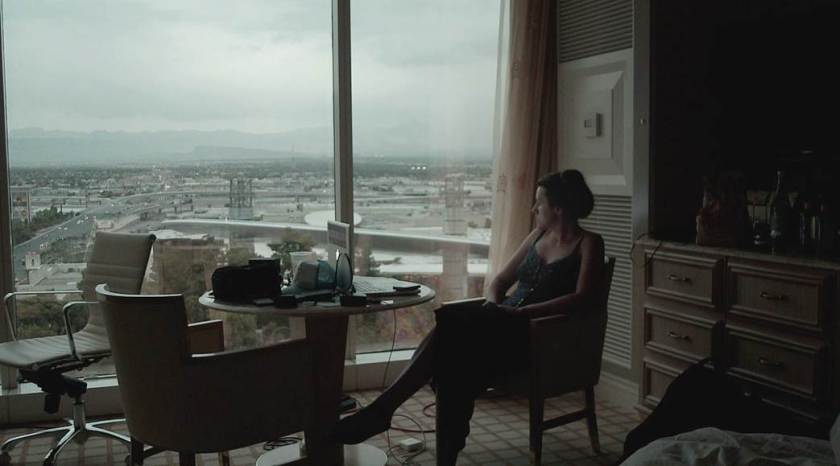
Director L. Frances Henderson takes a creative approach to her documentary “This Much We Know,” blending traditional nonfiction interviews with narrative recreations to construct a gripping hybrid of the two. Loosely based on the book “About a Mountain” by John D’Agata, the film covers a lot of ground and can feel overwhelming (and mentally exhausting). But Henderson digs deep beneath the glitz, glamour, and money that provides Las Vegas’ magical facade and grapples with the very real problems that are facing the city and others throughout the country.
Las Vegas is the suicide capitol of the nation. After the death of her friend, Henderson heads there to seek answers. She becomes consumed with the story of local teenager Levi Presley, a 16 year old who jumped from the roof of the city’s tallest casino, the Stratosphere. While investigating the suicide epidemic, Henderson finds that the city is also dealing with the serious problem of trying to bury decades of nuclear waste at the nearby Yucca Mountain. These two stories collide as she links environmental issues and suicide into a film that raises a multitude of existential questions and will have you looking at the world in a totally new light.
There is a lot going on in this documentary, and Henderson tries her best to tie everything together seamlessly. She mostly succeeds, especially when keeping the story’s focus on the issue that’s most personal to her: the struggle to understand and find closure with her friend Sarah’s suicide. The documentary draws parallels between Sarah and Levi, two outgoing, seemingly happy, active people who had no signs of depression, and the shock that came from their decisions to end their lives. Henderson wrestles with finding the answers to questions that are unanswerable, especially the one that consumes loved ones who are left behind: “why?“
The debate around nuclear storage waste storage is also done well, but jumping into the Yucca Mountain story feels like a wild tangent that’s out of place. Henderson eventually ties it all together, but first she presents a rambling, essay-like detour towards everything from psychic readings to the proliferation of false narratives and alternate truths that are running rampant in society. The story and themes are complex and multilayered, and it’s quite honestly a little too much for a film to tackle. However, “This Much We Know” is a smart and thoughtful look at the way humans process traumatic events, and the setting of an artificial neon paradise surrounded by miles of dusty desert is a fitting metaphor for the masked suffering of an American city.
By: Louisa Moore
 Screen Zealots