
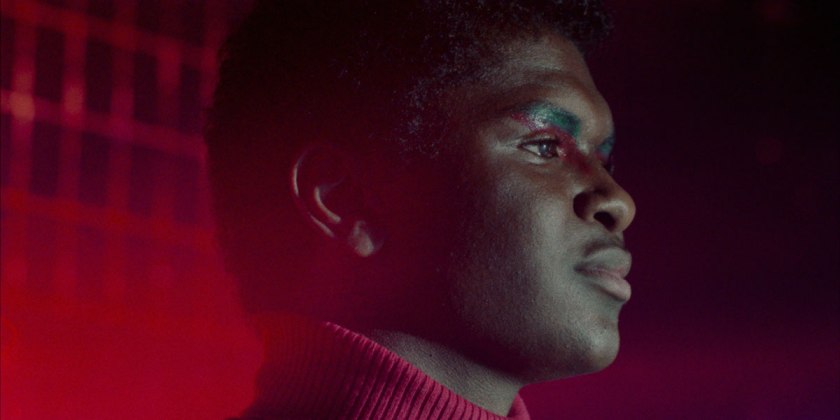
Writer-director Carolina Markowicz makes a bold statement on Brazil’s conservative, homophobic society with “Toll,” a film that utilizes uncomfortable humor to create an unflinching social commentary on the current state of affairs. It’s a story that embraces the complex duality of a younger generation that longs to free themselves from a history of repressive tradition, but must co-exist in a world dominated by the old-fashioned beliefs of their parents and grandparents.
Sueellen (Maeve Jinkings) is a single mother and toll booth attendant who works hard to take care of herself and her teenage son, Antonio (Kauan Alvarenga). When she learns that her son is dressing in women’s clothes and making lip-sync videos set to classic female torch songs, Suellen is distraught. On the advice of her homophobic co-workers who tell her that the boy is “sick” with a “disease,” Suellen decides to send him to a gay conversion camp run by a priest. It’s expensive though, and she must turn to a life of crime in order to earn enough money to afford the treatment.
It’s a story of tough love that’s troublesome, especially when Suellen proclaims that she wants to “fix” Antonio. It’s heartbreaking that she honestly thinks she is doing what’s best for her gay son. Everyone here is in pain, and nobody practices what they preach. The conservatives pretend to be the gatekeepers of morality, yet they don’t live by high moral standards themselves. Suellen is so desperate to hide that fact that her son is a homosexual that she has zero problems working with a criminal gang to steal from wealthy people who drive the route that goes right by her toll booth.
It’s that hypocrisy that Markowicz conveys so well through her storytelling. Anotonio is a young man who expresses himself through clothing and music, yet his own mother cannot cope with a son who behaves so flamboyantly. I guess when you hear from friends, colleagues, family, and society that it’s “sinful,” you may not know what else to do.
It’s painful to see a family relationship destroyed by cultural customs in this story of misguided mother’s love, crushing guilt, survival, and changing social landscape. “Toll” isn’t a feel-good film, but it certainly is a timely one.
By: Louisa Moore
 Screen Zealots